
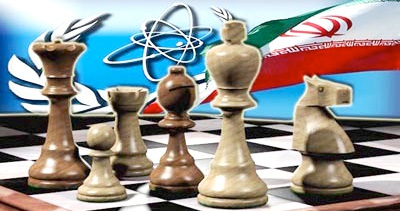
Nothing lasts for ever, least unstable and dictatorial regimes. But what will be the central force to hold Iran together after the regime change? The majority (say 2/3 of population) hates the IRI; but to build something new, one needs love! What will be the cohesive force to establish a new order?
The human psyche is a mixed bag of hateful and compassionate emotions. We probably have evolved with that duality, in order to survive the ruthless life in the wild, as well as be able to gather and cooperate in groups. Shear individual force is what maintains the life of many simpler animals, but social ties and binding forces are needed for the more sophisticated species. No man is strong enough to win it all on his own, without cooperation, love and respect of a social support group.
Of course the most primal cohesive social forces come from love and family ties, which can then evolve into tribal loyalties. The warriors of each tribe can be heralded to fight and sacrifice for the higher good of their common survival, which is invariably formulated as a moral and religious duty. Worship of common tribal roots and past ancestors, who are immortalized in legends, leads to reverence for gods and the hatred of demons (the enemy tribes).
We can find fault with gods and religions as much as we want, but the fact remains that no human society has ever evolved without religiosity. A strict set of do’s and don’ts, a common belief in god(s) and a moral foundation has been the cornerstone of every society from the most primitive to the most sophisticated. Even the democratic and secular view of society has a religiously protected set of creeds (individual rights, private ownership and freedom of expression) which are indeed the evolved form of Protestant, Roman and Greek believes.
Without turning this piece into a protracted sociology term paper, let’s see what has kept Iran together in the past, and what can do the trick in the future. Even a cursory view of the past shows a strong religious belief in the core, with at least one god (good) and one demon (bad). God, through its prophets and priests told the people what to do (good behavior) and what to avoid. God (actually priests) also confirmed the ruler of the time, who was in charge of the warriors of the tribe or nation. National monarchy needed monotheism as a simple way to herald people’s faith and love; and the feeble priests needed the warrior kings to survive among the unruly brutes.
That simple social order was cyclically challenged through wars of succession, foreign invasions and indigenous uprisings. However, like a faithful circle of life, Iran as a nation has tumbled around, but been mostly ruled by the simple Warrior-Priest (WP) alliance throughout history. Dynasties, religions and tribes have come and gone, but the central premise stayed the same, until the 20th century.
Contemporary challenges to the ancient regime came from an understanding of the modern Western ways, and culminated into the Constitutional Revolution (1906), near abolition of monarchy (1925), Tudeh and National-Front movement (1952) and finally the 1979 revolution.
After the collapse of IRI, the following forces will try to build cohesive national or regional systems, by recruiting the young masses of society around their ideas and ideals. As currently IRI does not allow free expression of thoughts and flourishing of ideas, upon its collapse; it will again be a mad rush to fill the power vacuum and reach the top.
1. The Western minded democratic seculars, who are disorganized, with little cohesive support in Iran. What is the binding force that this group can use to muster the masses around its ideals? Will people understand them, love them and trust them? Can they translate their thoughts and expressions (say secularism) into the people’s language? Iran may eventually evolve into their path, but not immediately after the collapse of IRI.
2. The Monarchists: with the reverence for a select family who reportedly god had assigned as the true rulers of Iran. IRI has made their predecessors look real good now, but do they have the love, understanding and trust of people? Will the people of Tehran, Tabriz or Mashhad be able to bond with a group of LA based wealthy and vain monarchists?
3. The Marxists who come under numerous names and groups, typically each with less members than titles. They still cling to one version or the other of the discredited Marxist belief that we would all be better off, if the disposed (actually the Communist Party) rules the whole society with the iron fist of the dictatorship of proletariat. Any chance for them in the religious, trade-loving and conservative Iran?
4. The Islamist-Marxists: with their strong personality cult and legion of fearless mujahidin, who have tried to bridge the gap between socialism and Islam? They are certainly much more prepared than groups 1, 2 or 3; with more devoted supporters and much better organizational skills. But will the Iranians dare to experiment with their peculiar version of Shiaism, after 30 years of madness?
5. The reformists and the opportunists: who are already established in the 2nd tiers of Iran’s power structure? They benefit from the same religious base as IRI, have adopted many of the democratic slogans, and actually live and breathe in Iran. Their problem is timidity and hesitation, as they fear life after IRI, as much as they dislike its oppression. This group can initiate the collapse of system (like Gorbachev did to Soviets), but will probably lose the ultimate power struggle to a forceful populist (like Putin).
6. The ultra-nationalists who hate anything that reeks of ‘Arabs’ and Islam? They can offer a dreamy version of past glories; even align with the monarchists and seculars, on a negative platform of IRI cleansing. History shows that such groups can form an effective alliance around a ‘strong-man’ who can muster the underlying prejudices and prides of the masses toward a forceful take-over, especially during times of intense internal trouble.
7. The regional forces who seek independence and sovereignty, apart from the arrogant and oppressive Fars? After a painful collapse, they will surely have a fighting chance at least in the minority dominated provinces of Azerbaijan, Kurdistan and Khuzestan. Will their internal resources and perhaps foreign aid be enough to defend an independent territory? Will they be able to ally and even join the neighboring ‘states’ of the same ethnicity?
IRI has surely holed up Iran in an unpleasant, unbearable and unpredictable conundrum, which threatens its future, as this fascist regime nears the end of its pitiful existence. The winds of change are gaining power, shame that due to the relentless IRI oppression and propaganda; the Iranian people are mostly unprepared to realize the viable future choices for a democratic and prosperous country.